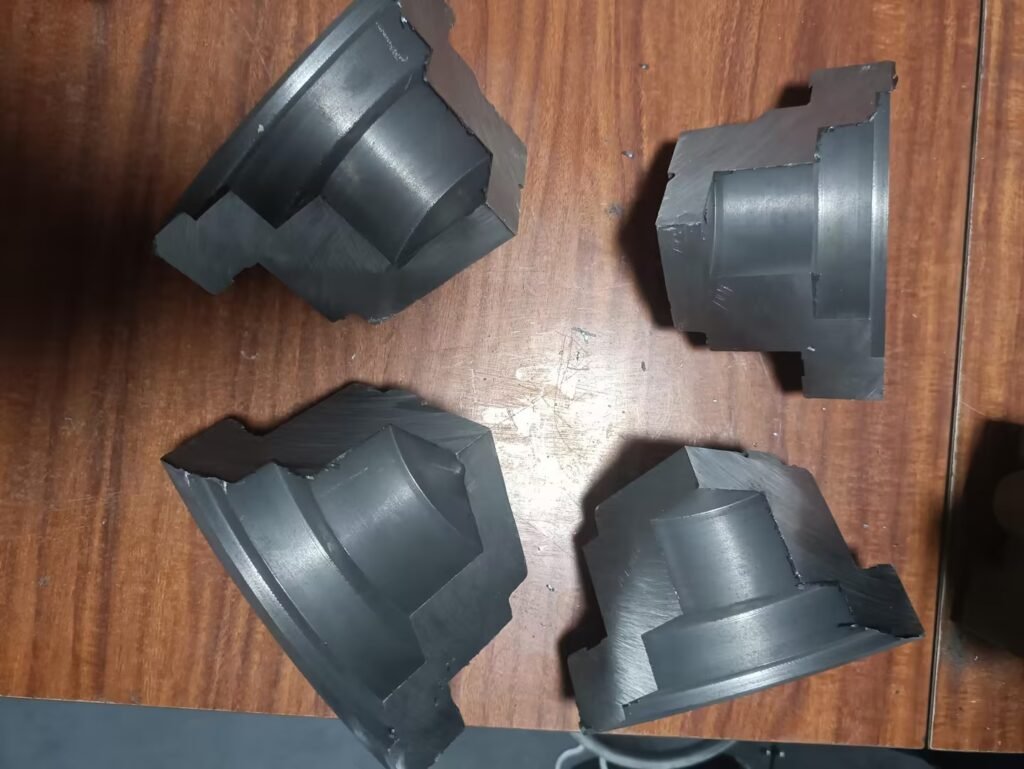
In iron casting production, evaluating internal quality is just as important as inspecting the external geometry. Although castings may appear smooth and uniform on the outside, internal defects such as porosity, shrinkage cavities, inclusions, cold shuts, and microstructural inconsistencies can significantly affect their mechanical performance. One of the most direct and reliable evaluation methods is sectioning the casting at different locations to observe how the internal conditions vary across the component.
1. Why Sectioning Matters in Iron Castings
Iron castings, whether produced from gray iron, ductile iron, or alloyed iron, undergo complex solidification processes. Temperature gradients, wall thickness differences, gating design, and cooling rates can create uneven internal structures. By cutting the casting at key positions, engineers can:
- Reveal defects that cannot be detected visually
- Analyze solidification behavior across thick and thin sections
- Validate mold design and feeding systems
- Improve process parameters for future production
Sectioning provides a “true picture” of the internal health of the casting.
2. Internal Reactions in Different Casting Areas
Different areas of an iron casting solidify at different speeds, causing distinct internal reactions. Sectioning at these locations often shows clear differences in microstructure and defect distribution.
2.1 Thick Sections
Thick-wall areas cool slowly, which can cause:
- Shrinkage cavities due to insufficient feeding
- Centerline porosity where the metal solidifies from the outside inward
- Coarser graphite flakes (in gray iron) or larger nodules (in ductile iron)
- Segregation of alloying elements
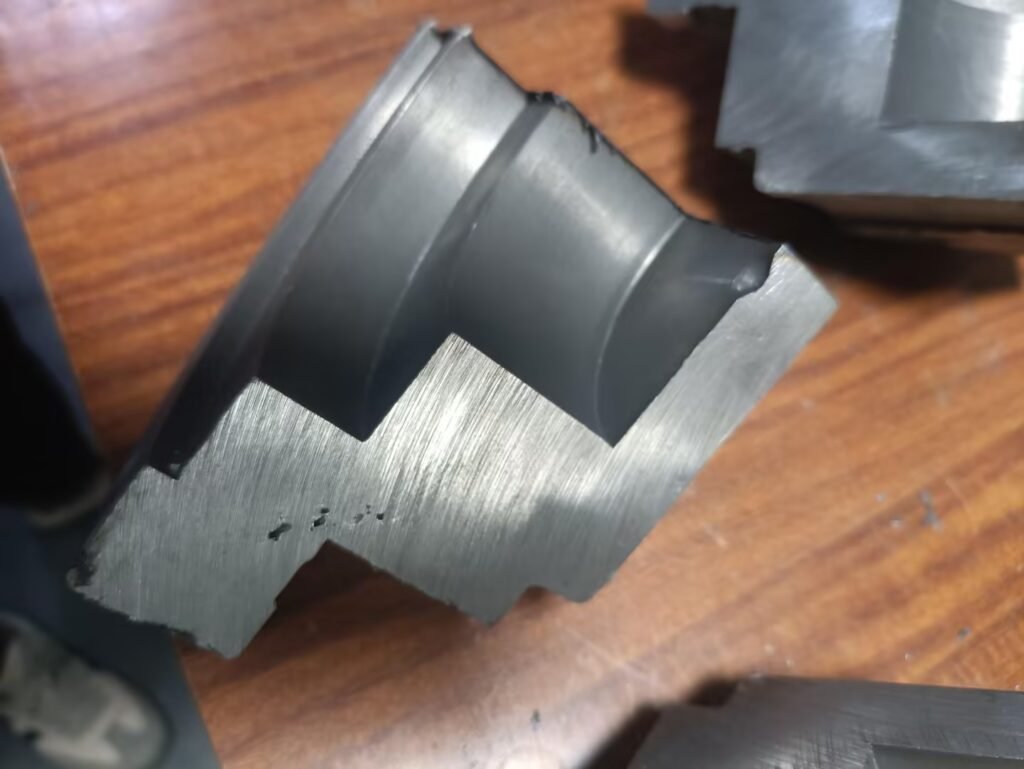
A sectioned surface of a thick part usually reveals larger grains and darker areas indicating delayed solidification.
2.2 Thin Sections
Thin sections cool rapidly. Common internal features include:
- Fine graphite structures and small grains
- Lower risk of shrinkage, but higher risk of cold shuts if the metal flow is unstable
- Higher hardness due to faster cooling
The sectioned area often appears uniform and dense.
2.3 Junction Areas (Ribs, Bosses, Transitions)
Transitions between thick and thin zones are critical regions. Sectioning here often reveals:
- Hot spots where metal accumulates and cools slowly
- Shrinkage porosity, typically dispersed
- Stress concentration marks affecting mechanical strength
These areas help engineers evaluate whether riser or chill placement is sufficient.
2.4 Gated and Fed Areas (Near Sprues, Runners, Risers)
These portions typically show:
- Inclusions from sand or slag carried by molten metal
- Uneven microstructure due to turbulent flow
- Occasional gas porosity
Sectioning near feeding systems helps assess gating design effectiveness.
2.5 Surface and Near-Surface Regions
Although not deep inside the casting, near-surface conditions provide important clues:
- Sand burn-on, veining, or oxidation
- Chill effects near metallic inserts
- Dense microstructure due to rapid heat loss to the mold wall
This helps identify mold material or coating problems.
3. What Sectioning Tells Us About Casting Quality
By comparing internal conditions across multiple sectioning points, manufacturers can identify:
- Whether feeding and gating systems are correctly sized
- If cooling rates are balanced across the casting
- Whether material composition meets performance requirements
- How to optimize casting design for better structural integrity
This data is essential for continuous improvement in iron casting production.
4. Practical Applications in Industry
Sectioning analysis is widely used for:
- Failure analysis when a casting breaks in service
- Process validation for new products or new molds
- Quality control to ensure stable production
- Research and development for advanced iron grades
It is a cornerstone of metallurgical engineering and foundry optimization.
Conclusion
Sectioning iron castings at different positions provides deep insight into their internal conditions, revealing variations in defects, microstructure, and solidification behavior. By understanding how different regions respond during cooling and solidification, foundries can diagnose production issues, improve casting design, and ensure consistent, high-quality products.