A Comparison of Two Surface Treatment Technologies
Surface treatment plays a crucial role in enhancing the corrosion resistance, appearance, and wear performance of metal parts. Among the most widely used industrial methods are Electrophoretic Coating (E-coating) and Manganese Phosphating. While both provide protective layers for ferrous metals, their processes, properties, and applications differ significantly.
1. Process Overview
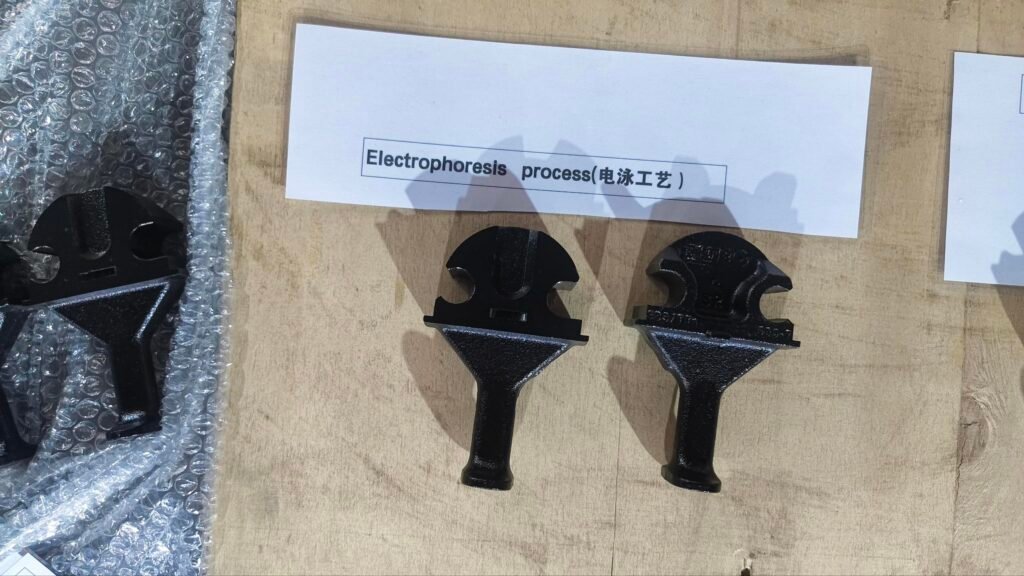
E-coating (Electrophoretic Deposition)
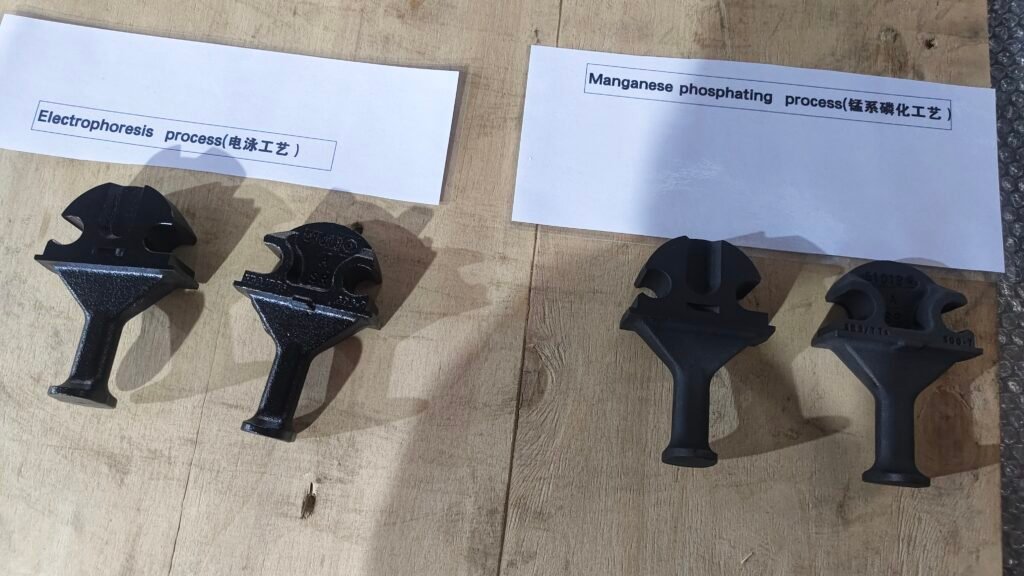
E-coating is an advanced painting process in which metal parts are immersed in a water-based paint bath and an electric current is applied. The charged paint particles migrate toward the metal surface, forming a uniform, tightly bonded coating layer. After deposition, the coated parts are baked to cure the film.
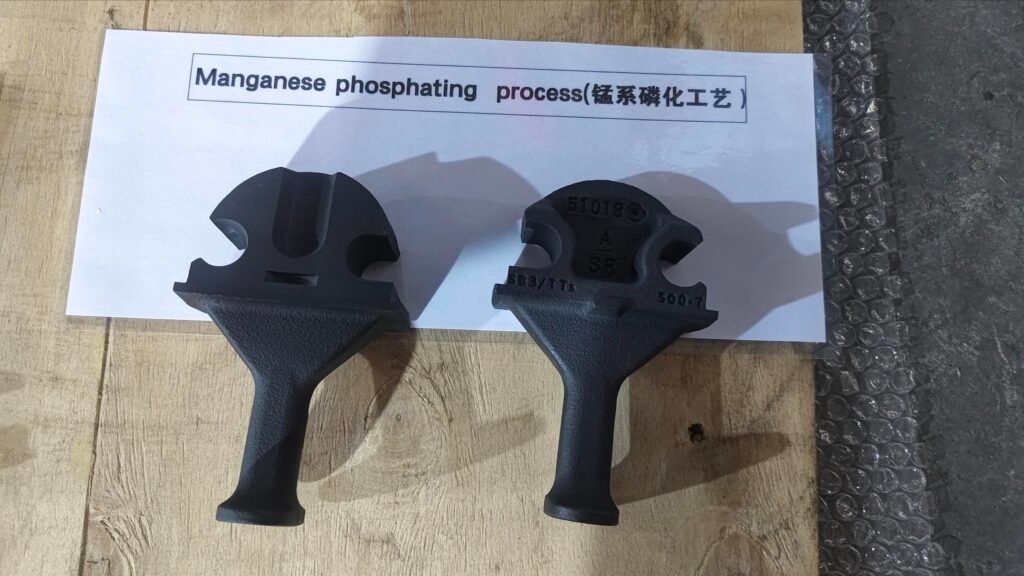
Manganese Phosphating
Manganese phosphating is a chemical conversion process that creates a crystalline phosphate layer on the metal surface. The parts are cleaned, then immersed in a manganese phosphate solution, where a controlled chemical reaction forms a dark gray, porous coating that improves oil retention and wear resistance.
2. Coating Characteristics
| Feature | E-coating | Manganese Phosphating |
|---|---|---|
| Appearance | Smooth, uniform glossy or matte finish | Dark gray or black, matte crystalline finish |
| Layer Thickness | 15–35 μm (adjustable) | 5–15 μm |
| Adhesion | Excellent adhesion to metal substrate | Good base for lubricants or paints |
| Porosity | Non-porous, dense film | Porous crystalline structure |
| Hardness | Medium | Relatively hard microcrystalline layer |
| Corrosion Resistance | Very high (especially when combined with topcoats) | Moderate, enhanced when oiled |
| Temperature Resistance | Good up to ~150°C | Excellent up to ~400°C |